

If You Have Dogs, You Know This Problem
BioLock Active does both — by keeping the waste contained and covered from the moment it's added.
Two Products. One Natural Material.
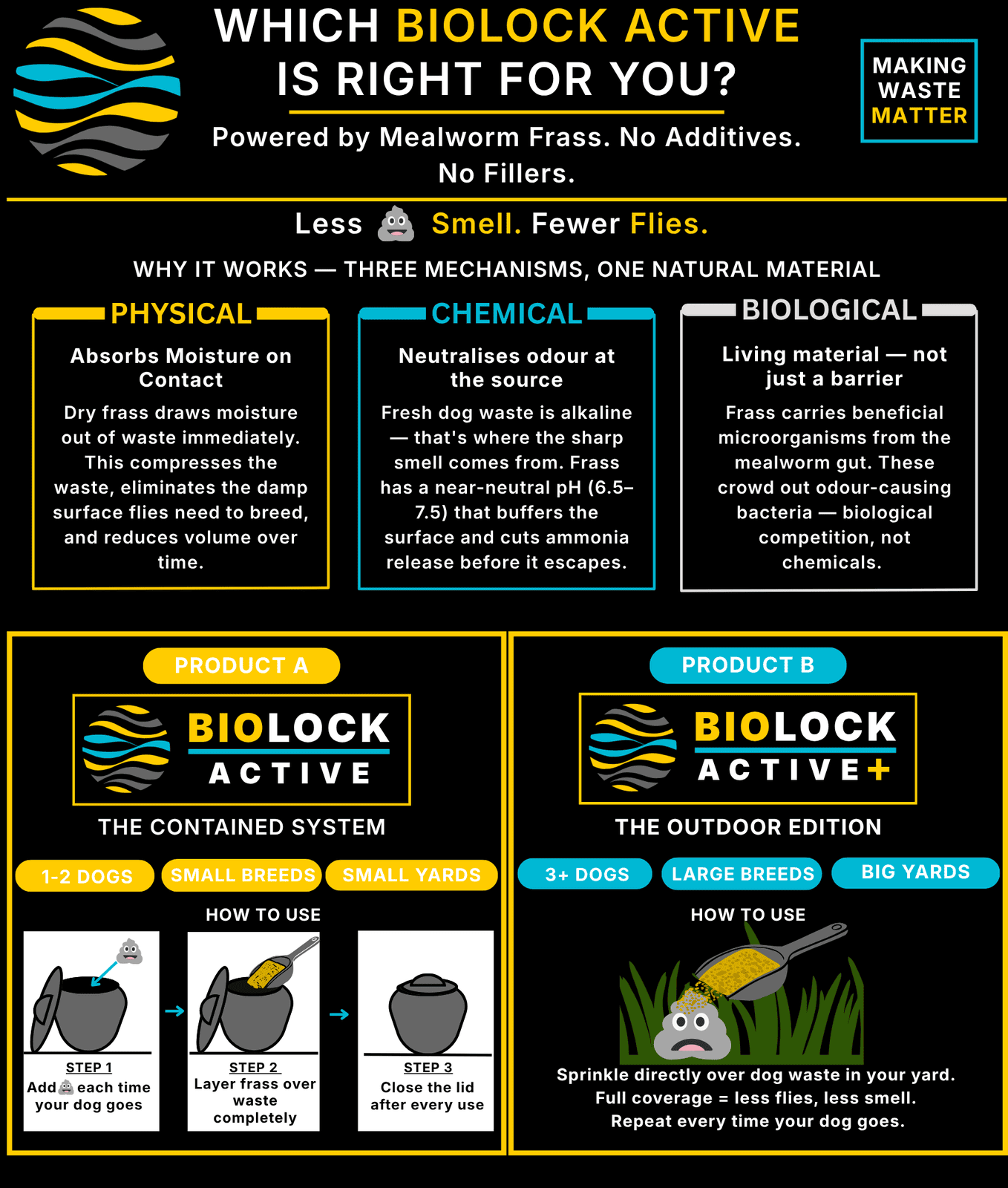
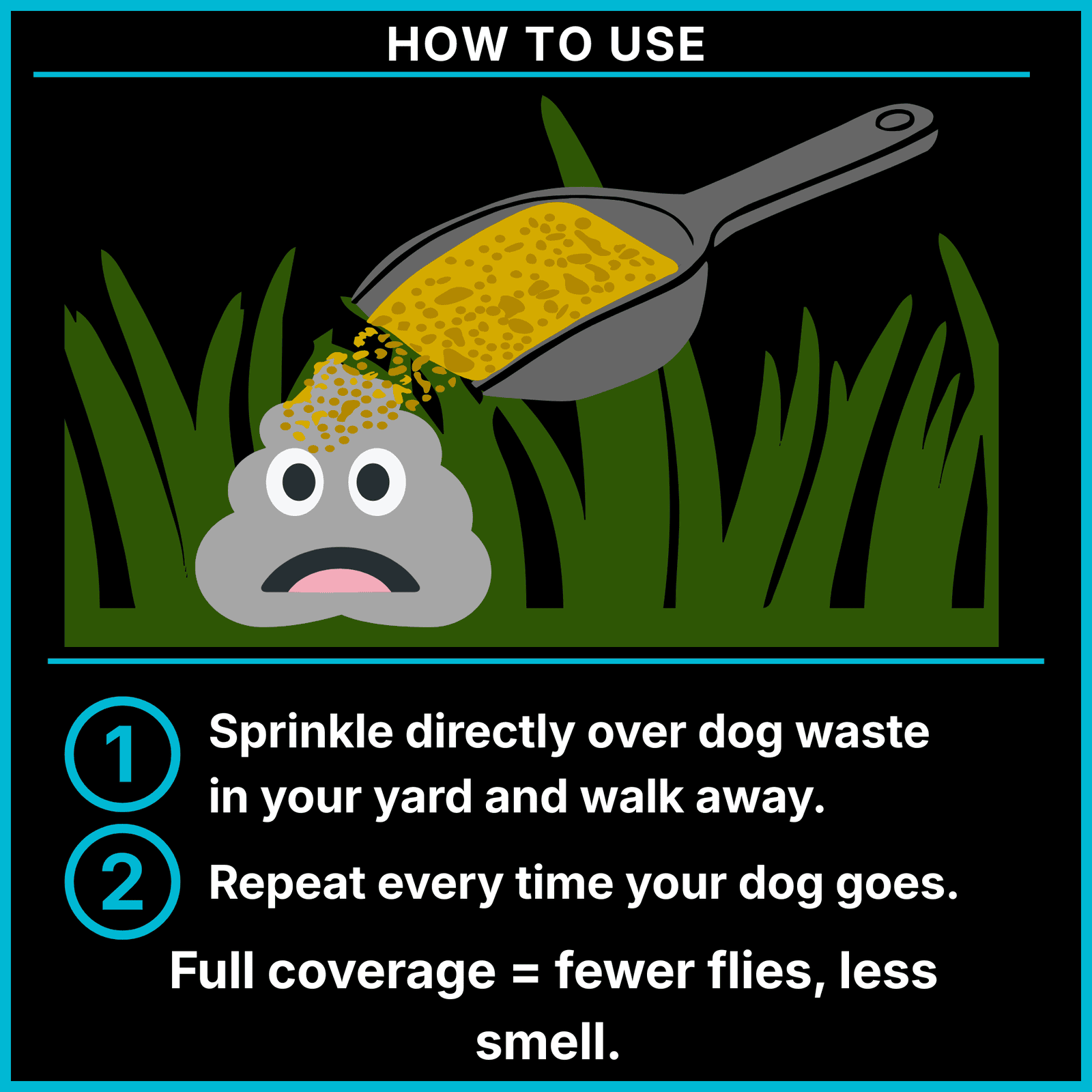
BioLock Active now comes in two formats — same material, same core mechanisms, but different applications for different needs. BioLock Active is a contained bucket system for smaller households. BioLock Active+ is designed for direct use in the yard, suited to larger properties, bigger dogs, or anyone managing waste across an open outdoor space. The poster below explains both products and helps you find the right fit in about thirty seconds.
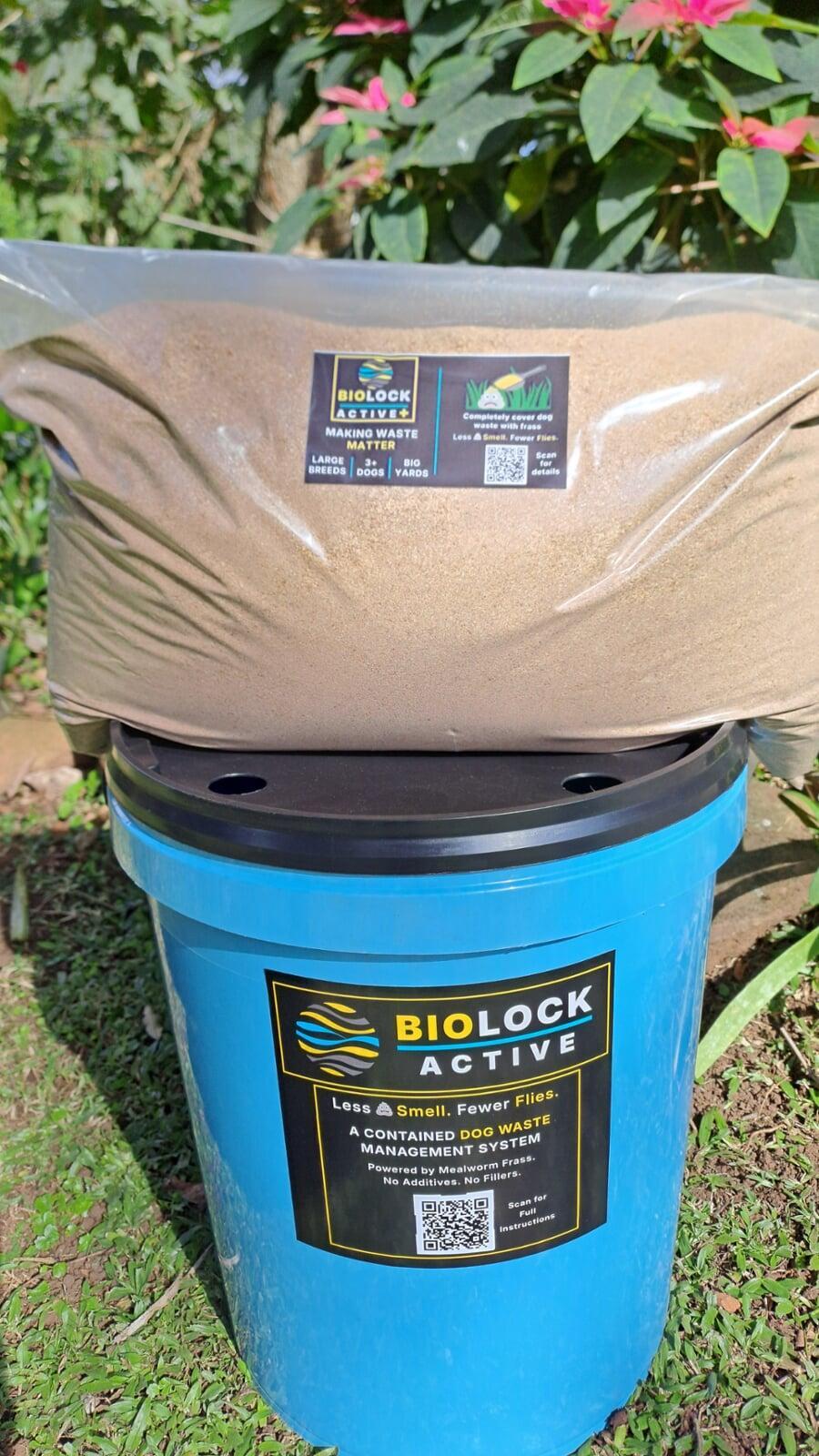
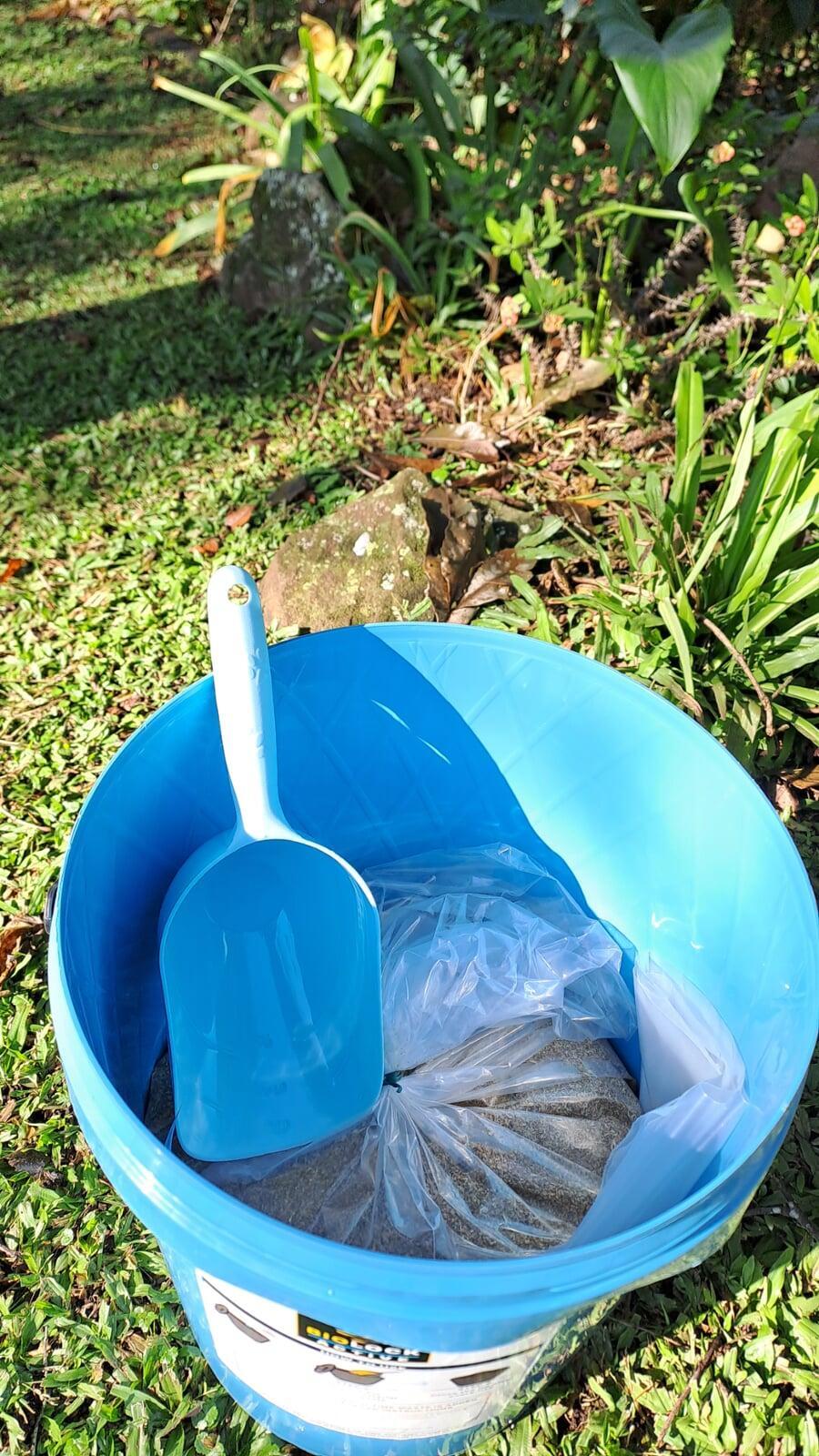
BioLock Active
Three Steps. One Contained System
The covered container keeps the odour inside. The material absorbs moisture and completely blocks the waste surface — cutting off the air access and chemical signals that flies need to locate a breeding site. Within 2–3 days, you'll notice the difference: less smell, fewer flies, and stable conditions inside the bucket. The system works because it contains the problem at the source instead of trying to manage it after it's already escaped.
The Material That Makes This Work
If you've never heard that term before, you're not alone. Mealworm frass is the natural byproduct of insect farming — specifically, the excreta of Tenebrio molitor, the yellow mealworm. For years, frass was treated as waste from the insect farming industry. Then researchers started looking at it more closely.
What they found changed everything.
Where Does It Go When the Bucket Is Full
Dispose of the contents according to your local waste practices. For many people, that means adding it to the compost pile.
Dog waste on its own doesn't compost well. It's too wet, too dense, and too nitrogen-heavy without enough carbon to balance it.
But dog waste covered in mealworm frass has been observed to behave differently.
So what started as a waste containment solution ends as a compost catalyst.
You solved your odour problem. And in the process, you're feeding the system that feeds your soil.
Important legal note: We're not selling this as a composting aid or fertiliser. We're telling you what the material is, what the science says it does, and what people commonly use it for after disposal. What you do with it is your decision.
If you compost it, make sure your compost reaches proper temperatures (above 55°C for several days) to safely break down pathogens from the dog waste. That's standard composting practice.
What Research Shows About This Material
Frequently Asked Questions
Usage Instructions
BIOLOCK ACTIVE
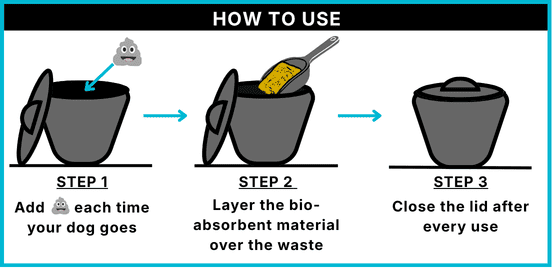
Note: BioLock Active bucket lids now feature passive ventilation holes that support aerobic conditions inside the system. Our trials confirmed that drilled ventilation performs as well as leaving the lid fully open for odour and fly control — while keeping the system contained. No tape or covering is required. Simply use the bucket as normal with the lid closed
BIOLOCK ACTIVE +
Share Your Experience
We're gathering real-world data to validate and improve this system. Your observations help.
We track: odour changes, fly activity, moisture levels, breakdown progression, ease of use, and whether you'd continue using the system.
Your feedback is anonymous unless you provide contact details. We use this data to refine BioLock Active and to support future scientific studies.